EquipYouth
EquipYouth is a IYF global initiative with support from the Caterpillar Foundation that aims to enhance youth employability by co-creating pathways that equip young people with the skills they need to flourish in local job markets and pursue their career aspirations.
At the core of EquipYouth is a commitment to addressing the challenges that young people and their communities have identified. By working closely with local stakeholders, educational institutions, and industry, we align our programs with the specific needs of the region. These programs have provided young people with a range of opportunities, including the chance to gain in-demand life and technical skills through hands-on training, internships, and on-the-job learning, along with personalized assistance for job placement.
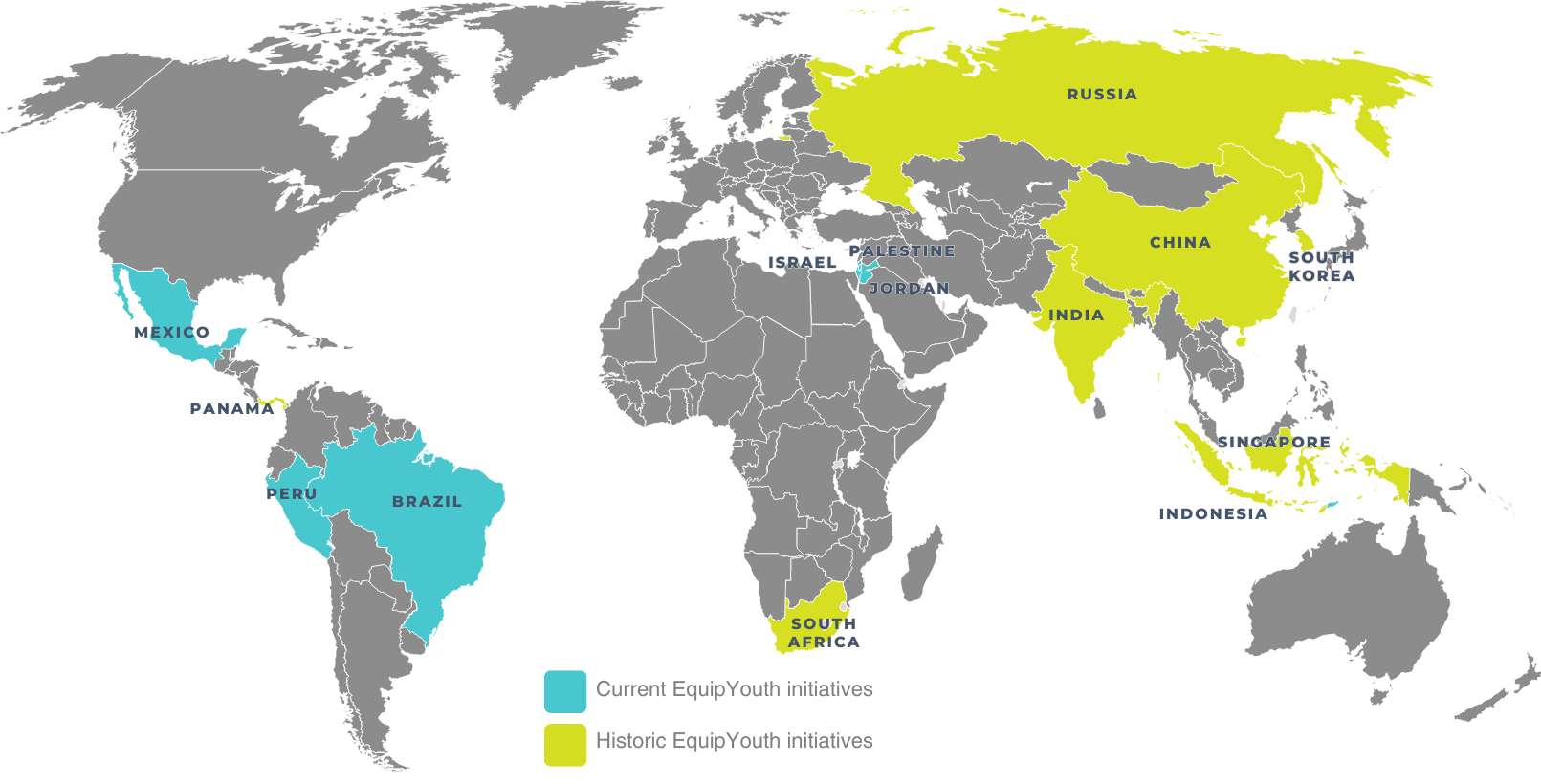
Since EquipYouth’s inception in 2011, IYF has collaborated with communities across Latin America, the Middle East, and Asia to address skills gaps and create opportunities for young people. In Brazil, where 26% of young people are unemployed, we aligned vocational training with labor market needs, thereby opening up new pathways for young adults. In Mexico, we worked with two of the country's most esteemed institutions of higher-middle-level education —Colegio Nacional de Educación Profesional Técnica (CONALEP) and the Colegio de Bachilleres (COBACH)—to equip 25,000 students with the skills necessary to pursue careers in advanced manufacturing and IT. In Panama, and Peru, we linked education with employment by equipping youth with the market-relevant skills and life competencies they needed to succeed.
Skills Gaps in Key Sectors
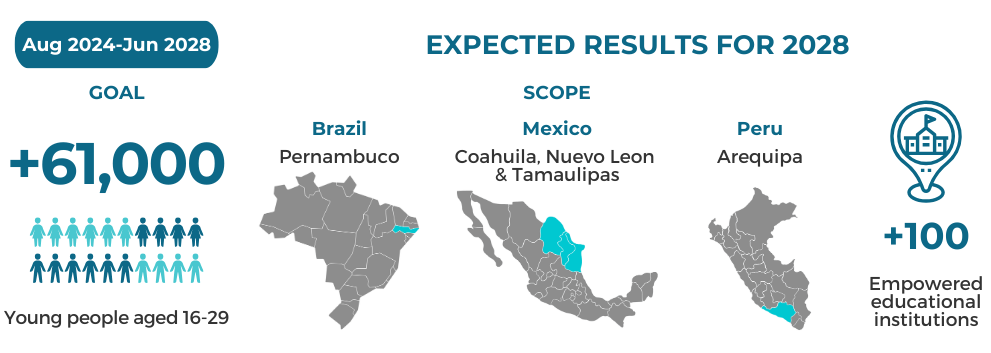
Building on these previous successes, IYF is currently focused on addressing significant skills gaps in the mining sector in Brazil and Peru, and the advanced manufacturing sector in Mexico. Through collaborative initiatives with key stakeholders, IYF is working to enhance technical curricula, provide life skills training, and promote access to job opportunities in these industries.
Brazil: Empowering the next generation of mining logistics professionals
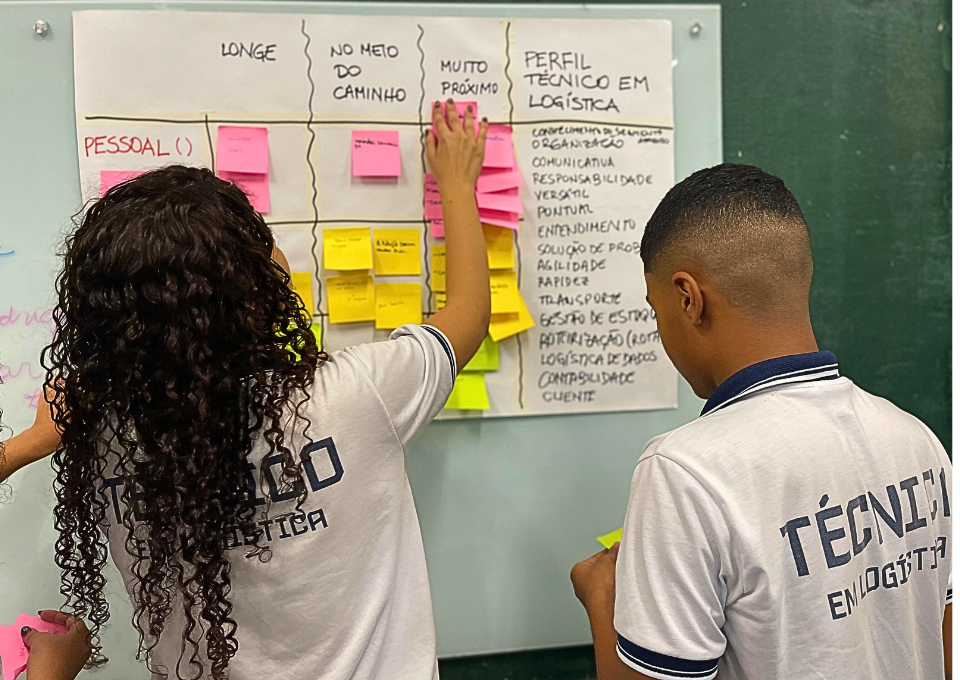
In Brazil, IYF is partnering with the Secretary of Education in Pernambuco to address the skills gap in the mining logistics sector. The initiative will directly benefit 4,000 young people by improving the logistics curriculum at 12 educational institutions. In addition, life skills development will be integrated into the curriculum of 58 technical schools, reaching more than 33,000 students.
The initial phase of the program will focus on designing and implementing effective solutions, followed by a scaling phase to ensure sustainability within the education-to-employment system. This comprehensive approach aims to equip young people with the skills and knowledge they need to succeed in the mining industry.
Mexico: Preparing youth for the future of manufacturing
In Mexico, IYF is working with partners in Coahuila, Nuevo León, and Tamaulipas to address the evolving skills landscape in advanced manufacturing. The program will improve technical curricula for three-year degree programs, benefiting 6,400 students. In addition, a data science curriculum will be implemented to equip 21,000 students with the skills to perform successfully in the areas of advanced manufacturing, improving decision-making based on the correct use and visualization of data. Furthermore, with the utilization of AI tools, they will be able to enhance industrial production processes, optimizing efficiency and reducing costs.
By focusing on building capacity and scaling solutions, IYF aims to ensure that young people in Mexico are well prepared to meet the challenges and opportunities of the advanced manufacturing sector.
Peru: Strengthening the logistics workforce
In Peru, IYF is partnering with the mining sector in the Arequipa region to address a critical shortage of logistics skills among young people. Currently, only 86 young people complete logistics courses annually across five campuses. IYF is set to engage a total of 2,877 participants, with the objective of achieving a completion rate of at least 75%. The initiative will also include a communication strategy to promote logistics careers among young people and their families. As in other regions, the program will evolve in phases focused on capacity building, scaling, and sustainability over four years.